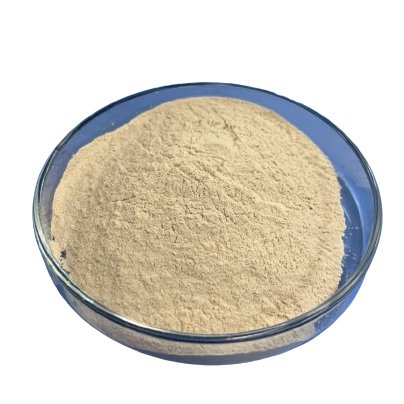
Montmorillonite, also known as microcrystalline kaolinite or Jiaoling stone, is a natural layered clay mineral containing aluminosilicate and the main active component of bentonite.
- Scalability (signature feature)
There is only weak static electricity and van der Waals force between TOT chips, water enters the interlayer domain, and hydrated cations support the chip.
-Sodium based montmorillonite: It has extremely strong swelling and can enlarge its volume by 10-20 times after absorbing water;
-Calcium based montmorillonite: has weak swelling, and most natural minerals are calcium based. It is commonly modified with sodium in industry.
The interlayer spacing varies with water content and belongs to variable interplanar spacing. - Cation exchange capacity (CEC, high cation exchange capacity)
Permutation of isomorphic materials causes the chip to carry a permanent negative charge, and interlayer Na ⁺ and Ca ² ⁺ are exchangeable cations that can exchange with other metal ions in the solution. - Huge specific surface area
When exposed to water, it can be peeled off into nanosheets, exposing a large surface area; The specific surface area of sodium based montmorillonite is much higher than that of calcium based montmorillonite.
The surface is negatively charged and has strong electrostatic adsorption ability, which can absorb positively charged proteins, bacteria, and endotoxins. - Colloids and thixotropy
Form a stable colloidal suspension after dispersion in water;
Thixotropy: the fluidity becomes better when stirring, and the gel becomes thicker when standing. Drilling mud, coatings, and cosmetics rely on this characteristic. - Adsorption performance (surface adsorption+interlayer adsorption)
Two adsorption mechanisms:
-Electrostatic adsorption: surface negative charge attracts positively charged substances;
-Physical adsorption: With a huge specific surface area, it relies on van der Waals forces to adsorb organic matter and toxins. - The layer has hydroxyl active sites
The exposed OH hydroxyl groups at the edge of the chip can undergo surface chemical reactions and graft modification, which can be used to make organic montmorillonite (organic montmorillonite). - Chemical stability, insoluble in water
The mineral skeleton is stable and insoluble in water, and cannot be dissolved or absorbed by the human digestive tract. This is the pharmacological basis of montmorillonite powder.